Welcome!


EASTLFT
 Share
Share


Product Description
What are the differences between a straight boom aerial work platform and a telescopic boom aerial work platform?
Telescopic boom aerial work platforms (also known as "extension boom aerial work platforms") and articulated boom aerial work platforms (also known as "knuckle boom aerial work platforms") are the two most commonly used types of aerial work equipment. The core differences lie in the boom structure, working range, and applicable scenarios. A detailed comparison can be made from the following dimensions to help you clearly distinguish between them:
I. Core Differences: Boom Structure and Operation Logic
1. Straight boom aerial work platform
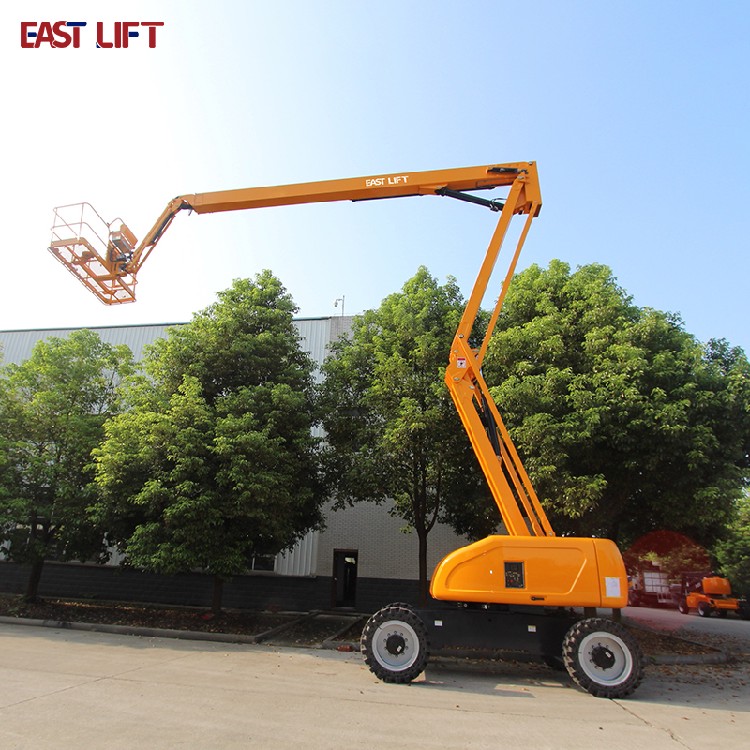
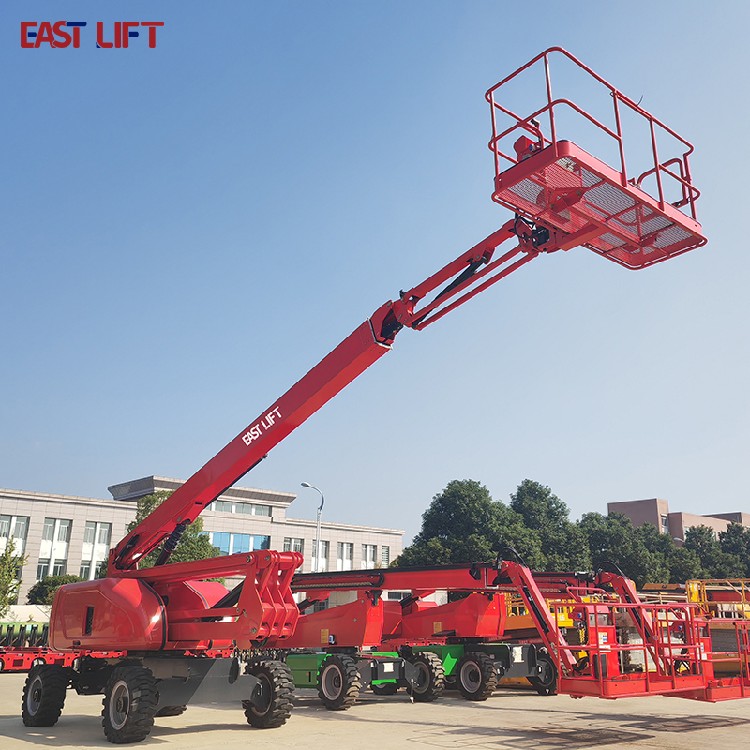
Boom structure: The boom is a "one or more telescopic straight arm" with no bending joints, and the whole extends in a straight line (similar to the telescopic principle of a telescope).
Operational logic: Lifting and horizontal extension are achieved through "extension and contraction + amplitude variation (up and down swinging)," and the operation path is closer to "straight-line advancement."
Appearance features: The boom is robust with straight lines, and when unfolded, the overall shape is simple with no obvious bending points.
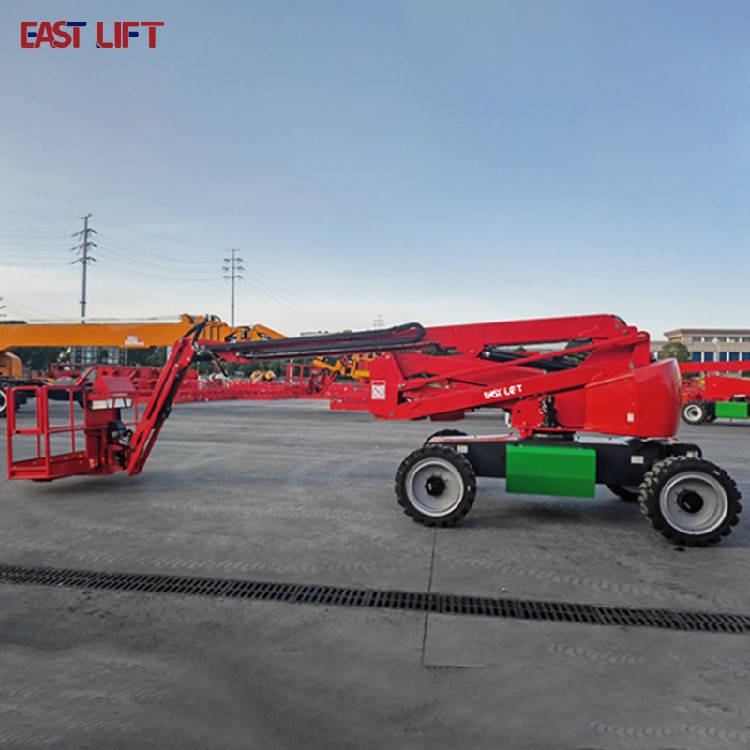
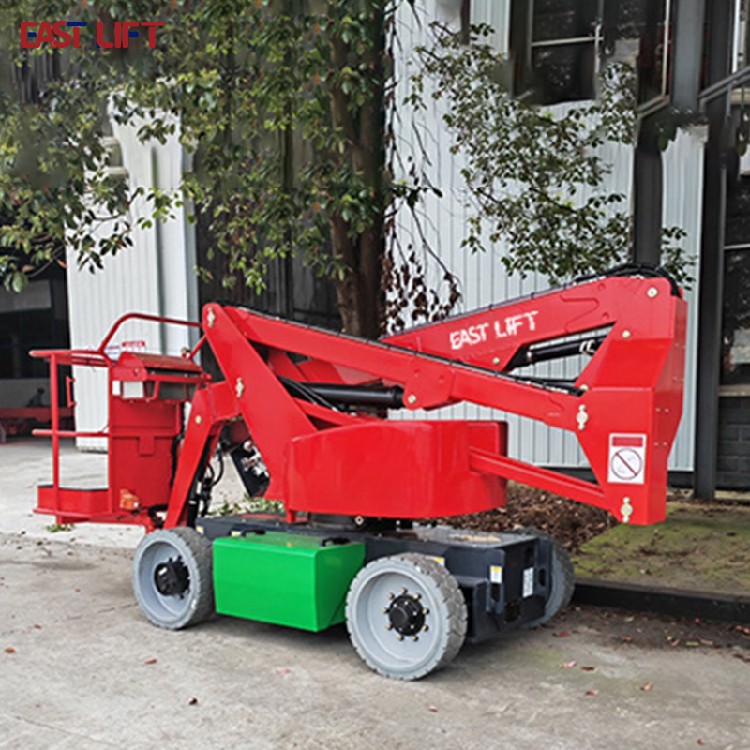
2. Articulated boom lift
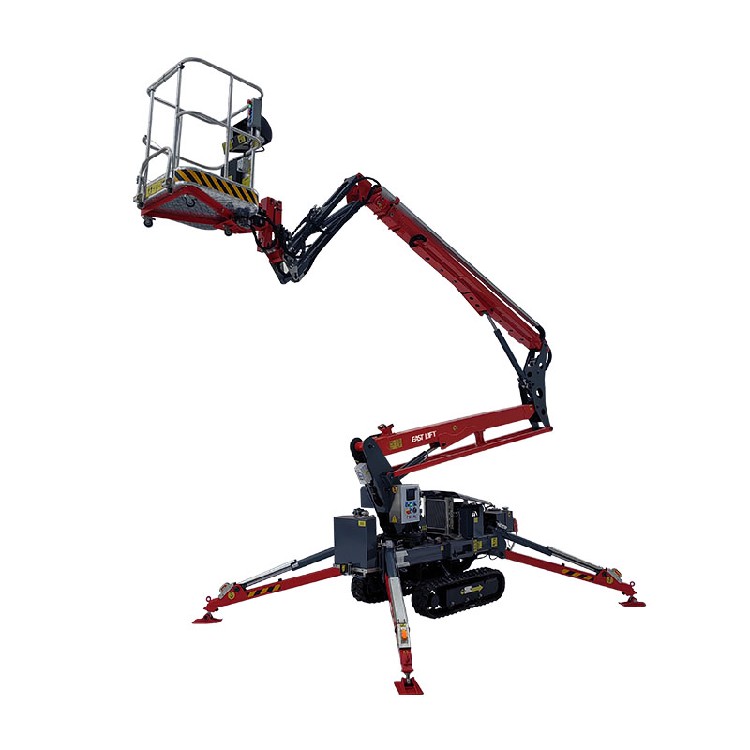
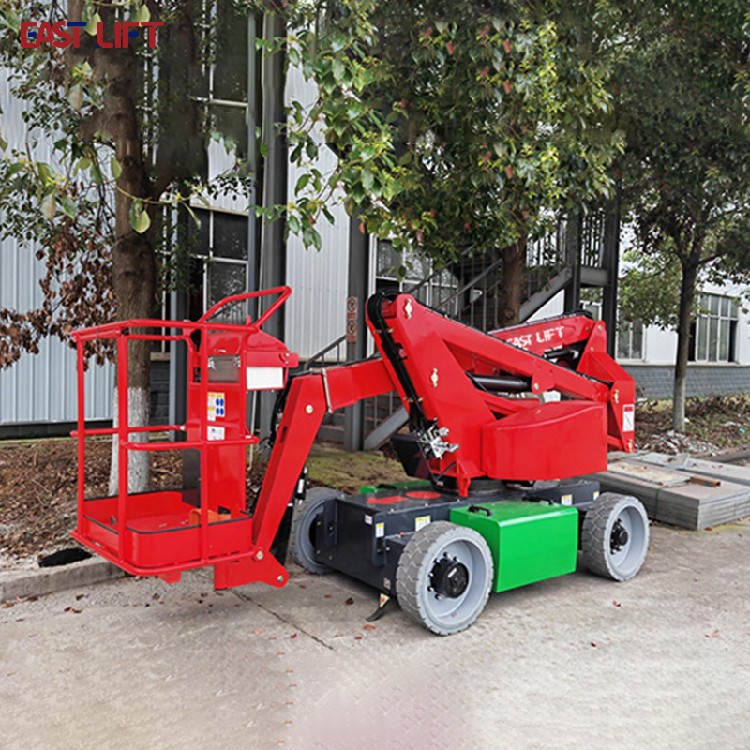
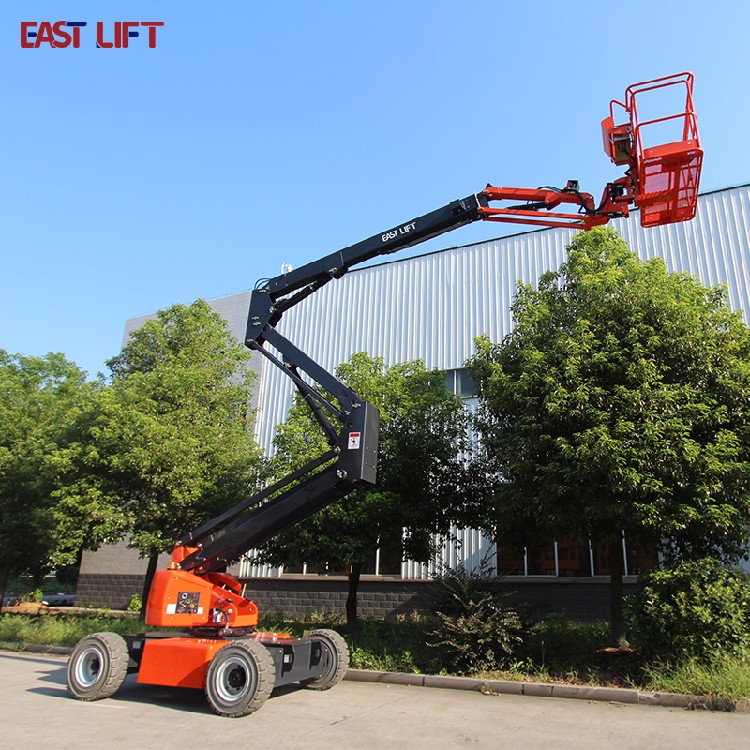
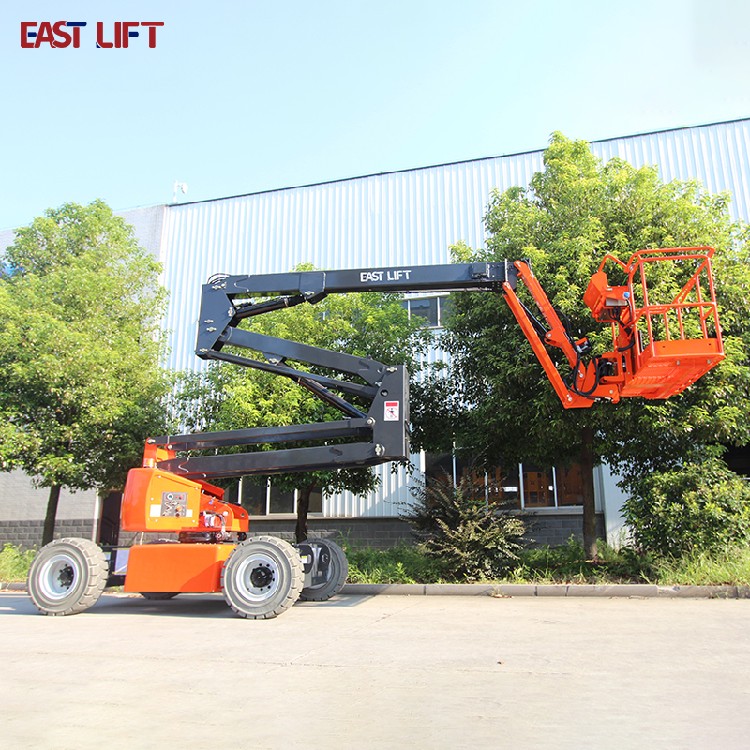
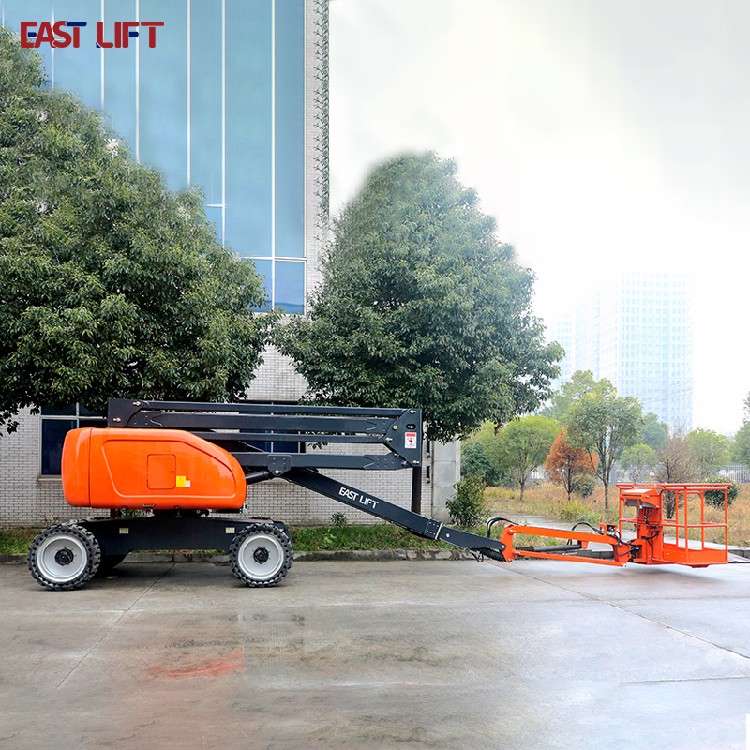
Boom structure: The boom consists of a "main boom + auxiliary boom" with 1-2 bendable joints in the middle (similar to the elbow joint of a human arm). Some models also have a 360° rotating worktable.
Operation logic: The operation is achieved through "main boom luffing + joint bending + auxiliary boom extension and retraction", and the angle can be flexibly adjusted to avoid obstacles.
Appearance features: The boom is foldable and can be stored (small in size when folded), and unfolds into a "Z" shape or "folding" shape, with obvious hydraulic drive structure at the joints.
II . Differences in Applicable Scenarios (Core Selection Criteria)
1. Straight boom aerial work platform: Suitable for "high, far, and open" scenarios.
Primarily used in obstacle-free scenarios requiring long-distance/high-altitude operations, its core advantages are "reach" and "height":
Large-scale outdoor projects: bridge maintenance, elevated street light installation, wind turbine blade maintenance, and exterior wall painting of high-rise buildings (unobstructed).
Open field operations: airport runway maintenance, large factory roof repair, billboard installation (high and far);
Requires efficient operation: Scenarios that require rapid lifting/extension to reduce waiting time (such as emergency repairs).
2. Articulated boom lift: Suitable for "complex, narrow, and obstacle-prone" scenarios.
Primarily used in scenarios with limited space and the need to navigate around obstacles, its core advantage is "flexibility":
Indoor/semi-indoor work: shopping mall ceiling installation, stadium maintenance, warehouse high-bay racking repair (in confined spaces);
Outdoor scenarios with obstacles: urban street greening trimming (avoiding trees), pipeline laying between buildings (avoiding walls), renovation of old residential areas (dense buildings, small space);
Detailed operations: Scenarios requiring adjustments from multiple angles (such as air conditioner outdoor unit installation, window cleaning, and low-voltage circuit maintenance).
III . Supplement: Selection Considerations
Prioritize checking for obstacles in the work environment: if there are obstacles, choose a boom lift; if there are no obstacles, choose a telescopic boom lift.
Next, consider "height and distance": for heights exceeding 30 meters or horizontal extensions exceeding 25 meters, straight booms are preferred;
Site limitations: In narrow spaces (such as alleys or indoors), only articulated boom lifts can be selected; straight boom lifts require sufficient deployment space (to avoid damaging surrounding objects).
Operational efficiency: For tight deadlines and high-frequency operations, choose a straight boom (fast speed); for complex operations, choose a curved boom (high precision).
Cost budget: If extreme height/distance is not required, articulated boom lifts offer better value for money, with lower transportation and maintenance costs.
Recommended Products

Contact Us
Shandong East Lift Machinery Group Co., Lt d.