Welcome!


EASTLIFT
 Share
Share


Product Description
Full English Translation (Professional & Export Standard, for brochures/quotes/customers)
How long do the batteries of aerial work platforms generally last?
The service life of aerial work platform batteries mainly depends on the battery type and operating conditions. The mainstream lithium iron phosphate (LiFePO₄) batteries normally last 6–8 years or 3000–5000 cycles under proper operation. Traditional lead-acid batteries usually last 2–3 years or 300–500 cycles. New carbon-based capacitor batteries can last more than 10 years with 10,000 cycles, but come at a higher cost.
Battery Life Comparison
| Battery Type | Service Life | Cycle Life | Typical Warranty | Application Scenarios |
|---|---|---|---|---|
| Lithium Iron Phosphate (LiFePO₄) | 6–8 years | 3000–5000 cycles | 5–6 years | High-frequency operation, high reliability requirements |
| Lead-acid | 2–3 years | 300–500 cycles | 1–2 years | Low-frequency operation, cost-sensitive projects |
| Carbon-based Capacitor | Over 10 years | 10,000 cycles | Extended warranty | Ultra-high frequency operation, long-term rental business |
Battery Life End Standard
The battery reaches the end of its service life when its capacity drops to 80% of the original rated capacity.
Cycle definition: One full cycle means discharging from 100% to 0% then recharging to 100%. Aerial work platforms mostly use opportunity charging; two partial charges/discharges per day are counted as one cycle.
Key Factors Affecting Battery Life
- TemperatureCapacity drops significantly below -10℃, and the unit may shut down below -20℃. High temperature above 40℃ accelerates battery aging. Optimal operating temperature is 15–35℃; temperature control systems are recommended.
- Charging & Discharging HabitsAvoid frequent full charge and full discharge (DOD>80%). It is recommended to keep battery level between 50%–70%. Fast charging is available but not recommended for long-term frequent use.
- BMS & MaintenanceHigh-quality BMS prevents overcharging and over-discharging. Regular inspection of cell balance and insulation is required. Lithium batteries are maintenance-free, while lead-acid batteries need regular water replenishment.
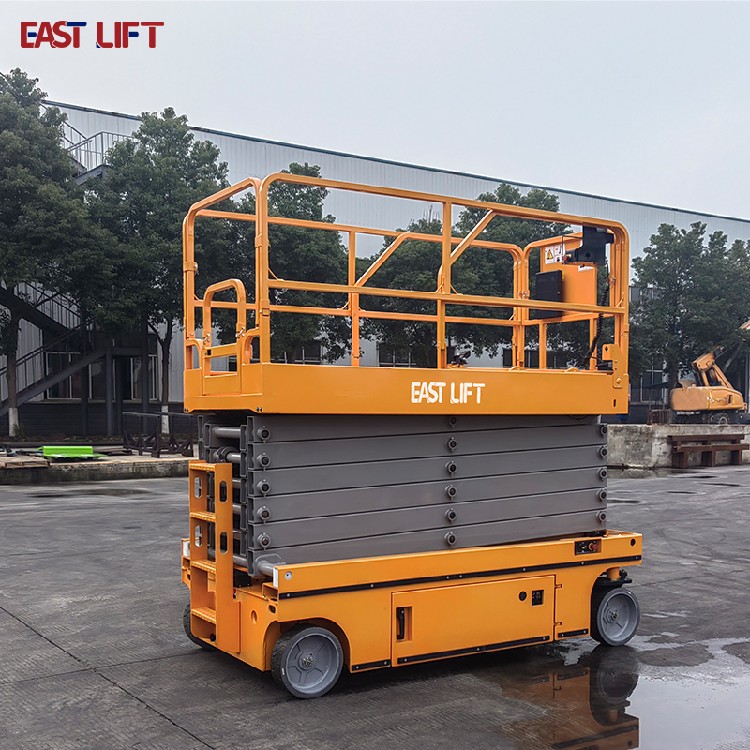
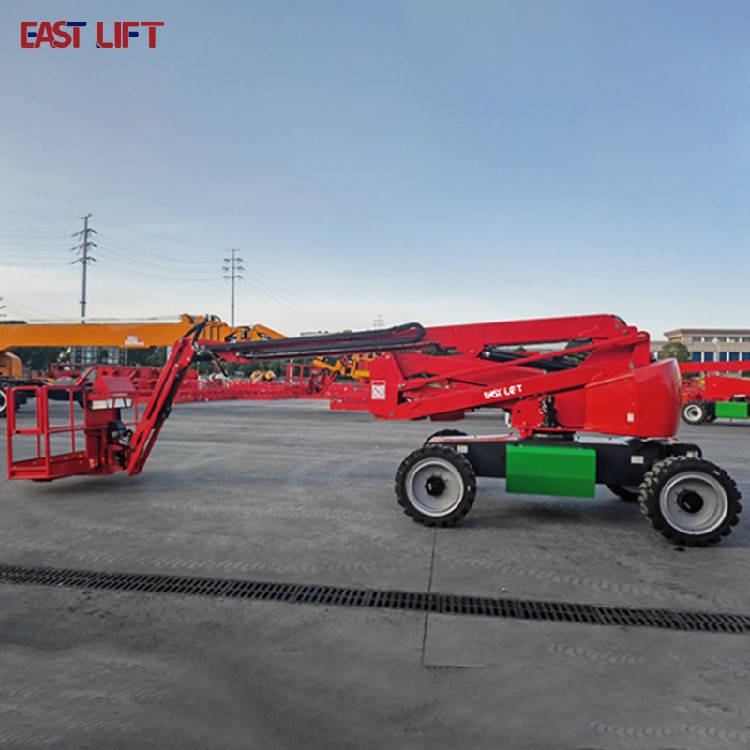
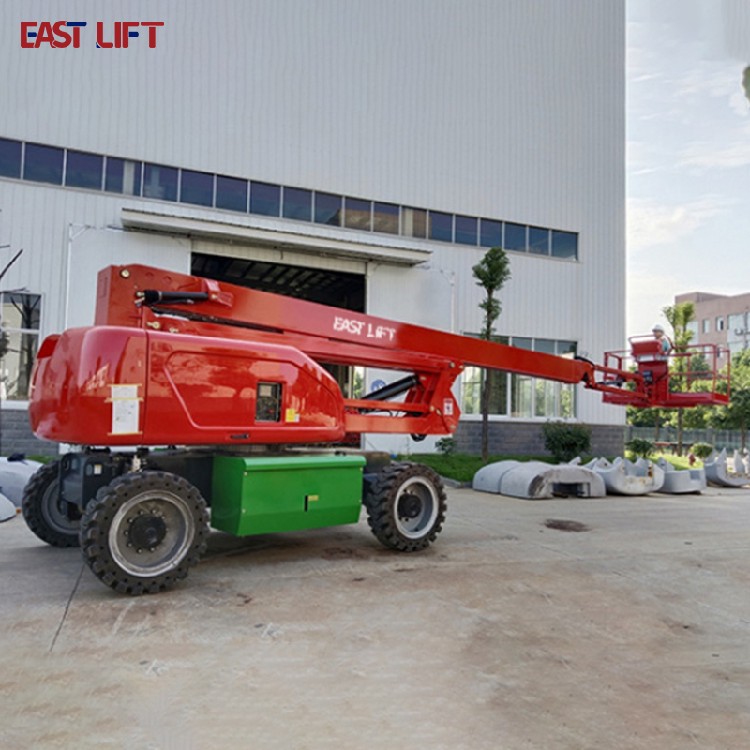
- Operating Conditions & LoadHeavy load, frequent start-stop and climbing operations accelerate battery degradation. Scissor-type lightweight models have longer battery life, while heavy-duty boom-type platforms degrade faster.
Recommended Products

Contact Us
Shandong East Lift Machinery Group Co., Lt d.