Welcome!


EASTLIFT
Update time:2026-05-09 13:34:05
 Share
Share


Price:$ 2 - $ 2 / unit
Min Order:1 unit
Product Description
Factors Affecting the Technological Iteration Speed of Aerial Work Platforms
1. Policies, Regulations and Safety Standards (the Strongest Mandatory Driving Force)
- Updates to national mandatory safety standards for special equipment, including structural strength, anti-overturning, fall protection and operating system requirements, force manufacturers to rapidly iterate structural design, electronic control systems and safety logic.
- Iterations of international access certifications such as CE, IPAF and ANSI compel export-oriented enterprises to upgrade product design in lockstep, covering battery explosion protection, electromagnetic compatibility, as well as speed and amplitude limiting logic.
- Environmental emission regulations including China’s Stage IV / Stage V non-road emission standards and new energy promotion policies directly accelerate the phase-out of diesel models and the iteration toward electrification and lithium battery adoption.
- Construction safety control requirements across regions, such as mandatory intelligent speed limiting, geographic electronic fencing, remote machine locking and real-name operator registration, drive the rapid upgrading of intelligent technologies.
2. Downstream Market Demand and Application Scenario Upgrading
- Demand from the leasing industry: Leasing companies focus on residual value, failure rate, maintenance costs and parts versatility, pushing manufacturers to adopt modular design for easy disassembly, maintenance and general part compatibility.
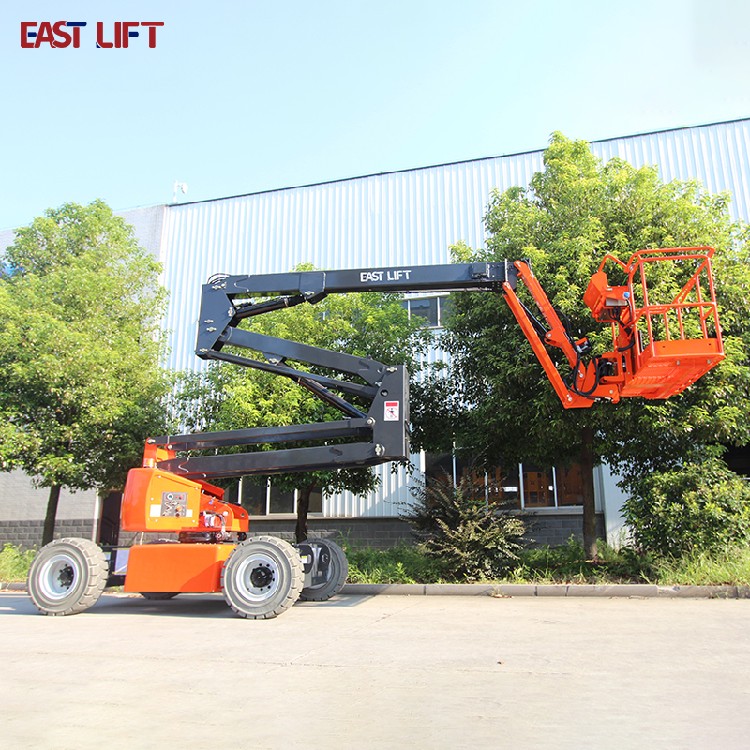
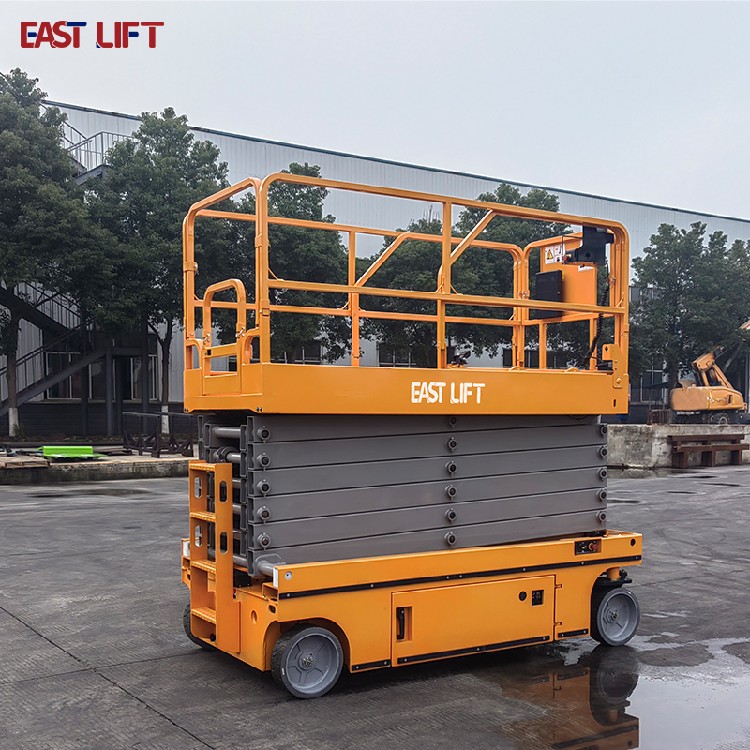
- Refined application scenario demands: Scenarios such as narrow indoor access, steel structure construction, wind power maintenance and stadium glass installation have accelerated the iteration of narrow articulated boom models, ultra-low scissor lifts and heavy-duty rough-terrain models.
- Rising labor costs drive equipment development toward intelligence and unmanned operation, including automatic leveling and one-click positioning functions to replace manual operation.
- Upgraded customer requirements for endurance, load capacity and working height — demanding greater operating height, larger load capacity, longer battery life and more compact body size — promote iterations in structural design and power systems.
3. Maturity of Core Supply Chain Technologies
- Lithium battery and energy storage technologies: Energy density, low-temperature performance, explosion-proof performance and BMS algorithm maturity determine the iteration pace of industry electrification.
- Hydraulic and electronic control systems: Technological breakthroughs and localized production of proportional valves, travel drive motors, controllers and sensors (tilt, load weighing, radar) directly accelerate overall machine upgrading.
- Supply chain stability of industrial chips, 4G/5G positioning modules, vehicle-mounted terminals and Bluetooth remote controls affects the implementation speed of intelligent functions.
- Maturity of high-strength alloy steel and aluminum alloy lightweight manufacturing processes dictates the pace of weight reduction, load capacity improvement and structural optimization iteration.
4. Industry Competition Landscape and Manufacturer R&D Investment
- Intense technological competition among leading brands such as Lingong, XCMG, Zoomlion and LTMG accelerates their new product iteration, forcing small and medium manufacturers to follow with model upgrades.
- Higher R&D investment ratio, abundant patent reserves, and strong capabilities in structural simulation, dynamic simulation and fatigue testing enable faster technological iteration.
- Copycat and homogeneous competition among low-end manufacturers, which only imitate appearance without upgrading core technologies, slow down the overall technological upgrading pace of the industry.
5. Penetration of Intelligent and Digital Technologies
- IoT-based remote operation and maintenance, including remote fault diagnosis, early failure warning and firmware OTA upgrades, drive continuous iteration and optimization of electronic control systems.
- Autonomous driving and automatic operation technologies such as automatic leveling, path planning and obstacle avoidance radar & visual recognition achieve faster iteration as technology matures.
- Big data-based operation and maintenance feeds real leasing working condition data back into product design, enabling rapid optimization of weak structural parts and vulnerable components.
6. Global Trade and Supply Chain Fluctuations
- Demand traction from overseas markets: Extreme climatic conditions in Europe, America, the Middle East and Southeast Asia (high temperature, high humidity, saline-alkali environments) force customized iterations in heat resistance, corrosion resistance and dustproof design.
- Restrictions on the import of core components such as hydraulic parts and controllers delay the iteration of high-end models; localized substitution of core parts accelerates technological upgrading.
- Exchange rate fluctuations, tariffs and trade barriers affect manufacturers’ new product launch schedules and R&D budget allocation.
7. Cost and Economic Constraints
- Excessively high costs of new materials and electronic control systems prevent the popularization of new technologies even if they are technically feasible.
- End-users’ high price sensitivity and reluctance to pay a premium for new technologies prompt manufacturers to slow down the launch of high-end technologies and prioritize cost-effective model upgrades.
Recommended Products

Contact Us
Shandong East Lift Machinery Group Co., Lt d.