Welcome!


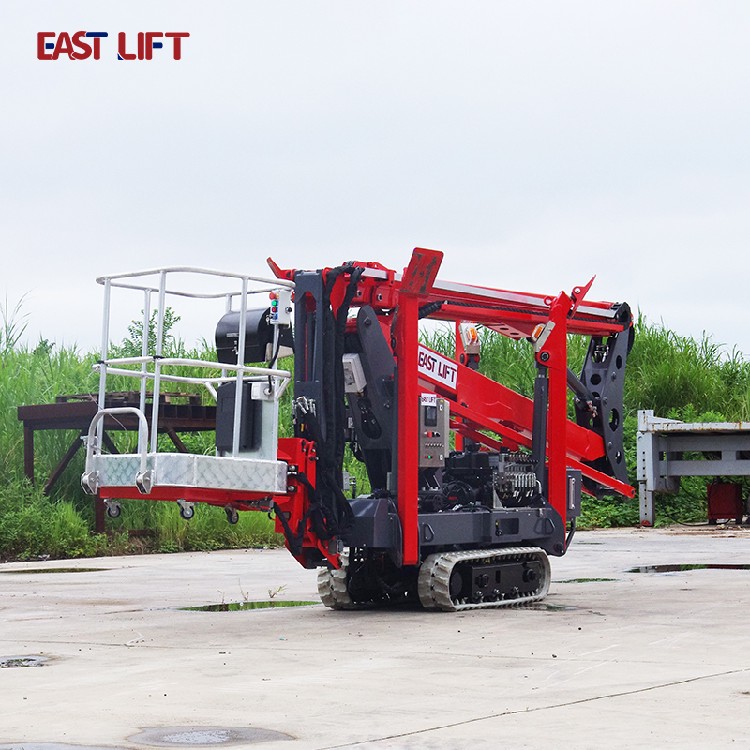


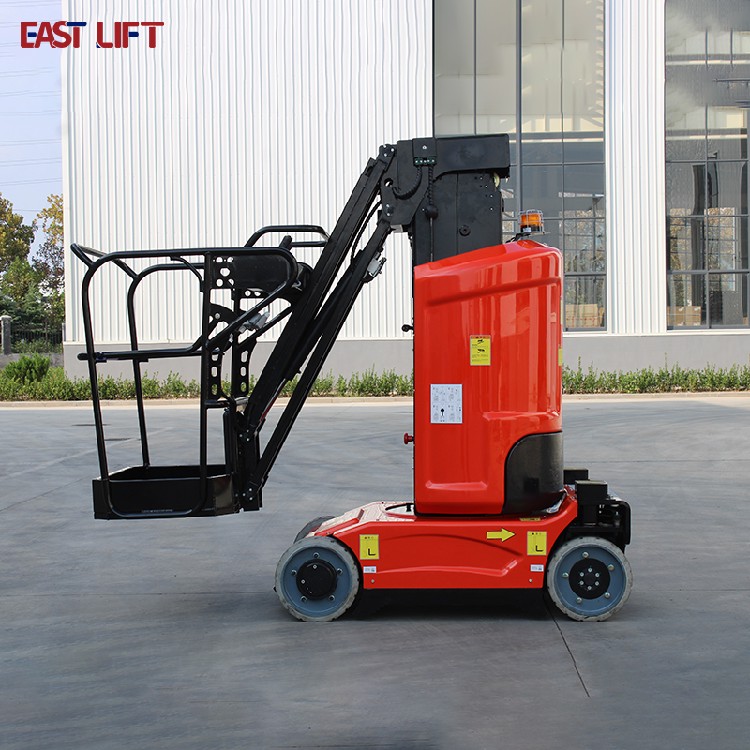
How to Choose the Battery for an AWP?
 Share
Share


Product Description
How to Choose the Battery for an AWP?
The battery of an aerial work platform is like the heart of the equipment. Choosing the right one can not only extend the equipment's battery life and ensure stable operation, but also reduce maintenance troubles and lower usage costs. If you choose the wrong one, the equipment will suffer frequent power outages and a sharp drop in battery life, which will delay the construction period and cause extra expenses at the same time. Whether it is an aerial work platform used for construction site operation, factory building maintenance or warehousing and logistics, the core of battery selection lies in the application scenarios, endurance requirements, maintenance costs and equipment compatibility.
I. Learn about the commonly used batteries for aerial work platforms
At present, the mainstream batteries for aerial work platforms on the market are divided into two major categories: lead-acid batteries and lithium batteries. There is also a nickel-metal hydride battery used in a small number of scenarios. Lead-acid batteries and lithium batteries are the main options, with significant differences between the two. Understand the differences between the batteries before making a selection.
1. Lead-acid batteries: a cost-effective choice
Lead-acid batteries are the most common traditional batteries; the batteries used in ordinary electric vehicles in daily life are generally lead-acid batteries. With mature technology, easily available spare parts and an affordable price, they are the first choice for many users.
Their advantages include the low procurement cost mentioned above, easy access to spare parts for subsequent maintenance, and compatibility with most conventional aerial work platforms. They can be directly replaced without modifying the equipment's circuit. However, their disadvantages are relatively heavy weight, average endurance, and the need for regular maintenance. Especially in low temperatures in winter, the endurance will be significantly insufficient. In addition, their charge and discharge cycles are limited—they generally need to be replaced after 2 to 3 years of use, and the cost of battery replacement will rise accordingly for long-term use.
Lead-acid batteries are suitable for light indoor work, such as lamp maintenance and warehouse shelf sorting, with relatively short operation hours, and scenarios where special personnel are assigned to equipment maintenance.
2. Lithium batteries: durable and worry-free
Lithium batteries are the mainstream upgraded option at present. They are the most suitable for the characteristics of aerial work platforms, and are also the preferred and most popular type promoted by major equipment manufacturers.
Their advantages are light weight, which can reduce the self-load of the equipment; strong endurance, a single charge can last about 8 to 10 hours to meet all-day operation; no need for regular maintenance, saving labor costs; high durability in low-temperature environments with little endurance loss in winter; a large number of charge and discharge cycles, which can be used for 5 to 8 years with no problem, making them more cost-effective in the long run; and support for fast charging, which is suitable for tight construction schedules. But their disadvantage is that the procurement cost is higher than that of lead-acid batteries with a slightly larger initial investment, and their compatibility is not as good as lead-acid batteries.
Lithium batteries are suitable for both indoor and outdoor use, such as construction site operation and curtain wall installation, supporting all-day operation, and are the first choice for current work.
II. Core selection guidelines
You don’t need to focus on too many complicated parameters when choosing a battery. Here are several suggestions for your reference to avoid unnecessary pitfalls during selection.
1. Select according to the application scenario
The scenario is the key to determining the battery type: for low-frequency indoor work, you can directly choose lead-acid batteries without spending a lot of money on lithium batteries; for high-frequency outdoor work, you can resolutely choose lithium batteries with reliable endurance and durability.
2. Consider endurance requirements
Before choosing a battery, calculate your daily operation hours and confirm the battery capacity (unit: Ah, the larger the value, the longer the endurance). If the daily operation is 4 to 6 hours, a regular-capacity battery is fully sufficient (generally 100-150Ah for lead-acid batteries and 80-120Ah for lithium batteries); if the daily operation is more than 8 hours, choose a large-capacity battery (more than 150Ah for lead-acid batteries and 120-200Ah for lithium batteries). Lithium batteries are preferred as their fast charging function enables supplementary charging without delaying work.
3. Select in combination with the budget
Many people hesitate between lead-acid and lithium batteries when hearing the prices, and the key factor is actually how long you plan to use the equipment. For short-term use (1 to 2 years), you can directly choose lead-acid batteries with low procurement costs—they can be discarded after use without considering long-term depreciation and other issues; for long-term use, directly choose lithium batteries. Although the initial investment is higher, they require no maintenance and have a long service life, with no need for replacement within 5 to 8 years. The average daily cost is even lower than that of lead-acid batteries, and it also saves labor and maintenance costs.
Summary
In general, in addition to following the above suggestions, attention should be paid to battery maintenance when choosing a battery, as proper maintenance can also extend its service life. For lead-acid batteries, regularly check the electrolyte and add distilled water in a timely manner when it is insufficient; avoid overcharging and over-discharging, and control the charging time to about 8 to 10 hours; store them in a dry and ventilated place when not in use. For lithium batteries, charge them at any time without waiting until they run out of power, and recharge them every month. Both lead-acid and lithium batteries should be avoided for use and charging in high-temperature, humid, direct sunlight and other harsh environments to prevent battery short circuit and aging. Disconnect the battery power when the equipment is not in use to reduce power consumption.
Recommended Products

Contact Us
Shandong Xusheng Machinery Technology Group Co., Ltd.