Welcome!


EASTLIFT
 Share
Share


Product Description
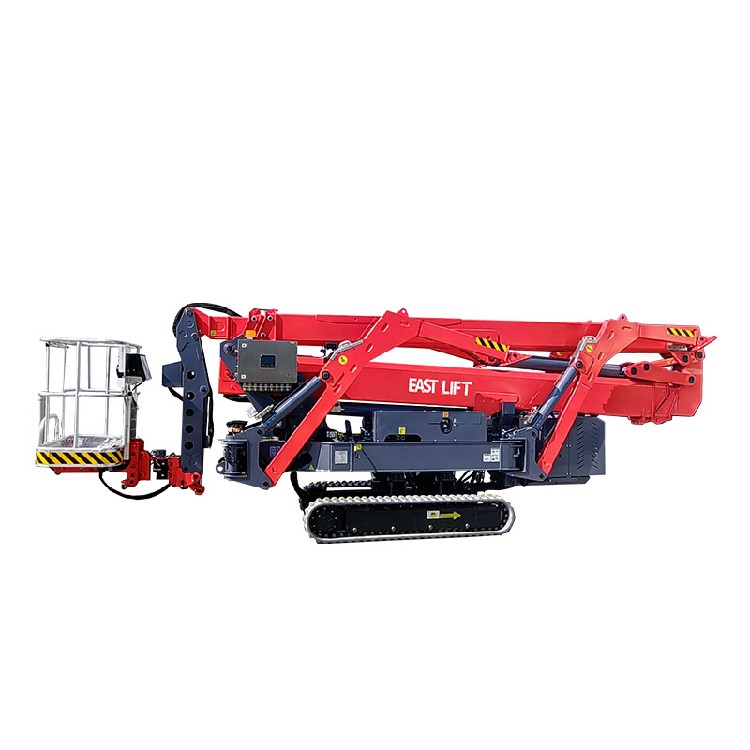
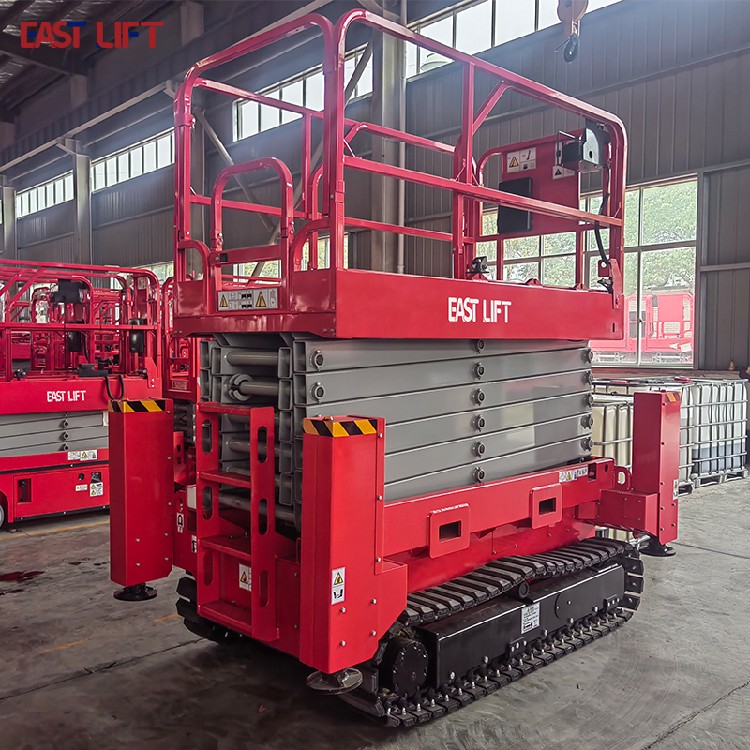
Spider lifts (10-meter class) offer strong terrain adaptability and operational flexibility, but they have significant limitations in certain special scenarios. Below is an analysis of typical scenarios unsuitable for spider lift operations, along with specific reasons:
I. Scenarios Exceeding Equipment Height or Load Capacity
1. Ultra-high-altitude operations (height > 10 meters)
· Issue: A 10-meter spider lift can only cover 2-3-story buildings. For scenarios requiring exterior decoration of 4+ story buildings or replacement of high-rise glass curtain walls, it cannot meet height requirements. It must be replaced with a 20+ meter straight-boom aerial lift or tower crane.
· Case: When repainting the exterior of a 5-story office building, the 10-meter working height of the spider lift cannot reach the top area. Forcing operations may cause instability due to excessive boom extension.
2. Heavy-load or large-material transportation operations
· Issue: Spider lifts typically carry 200-320 kg. Carrying heavy equipment (e.g., large concrete cutters exceeding 500 kg) or bulk construction materials (e.g., bundled scaffolding pipes) exceeds load limits, risking overturning.
· Case: When bridge maintenance requires transporting heavy tools like hydraulic breakers, spider lifts cannot bear the load. Instead, truck-mounted cranes with baskets should be used.
II. Scenarios with Harsh Terrain or Ground Conditions
1. Extremely soft or low-load-bearing ground
· Issues:
· Swamps, quicksand, newly poured concrete, etc., may cause sinking even with crawler pressure distribution.
· Indoor marble floors or wooden floors with load-bearing capacity < 200 kg/m² may crack under outrigger pressure.
· Case: For maintenance of an observation tower in a wetland park with soft soil, the spider lift may sink, requiring a floating-basket aerial lift or temporary load-bearing platforms.
2. High-slope or complex obstacle environments
· Issues:
· On slopes exceeding 15°, outrigger leveling is limited, and platform tilting may trigger safety alarms.
· Dense obstacles (e.g., thick forests, 交错 pipelines in narrow alleys) hinder boom extension and precise positioning.
· Case: Maintenance of mountain wind turbine towers, where sloped terrain and rock obstacles make spider lift travel difficult. Crawler climbing robots or helicopter-lifted platforms are needed.
III. Scenarios with Harsh Environmental or Climatic Conditions
1. Severe weather like strong winds or heavy rain
· Issues:
· Winds > Level 5 (wind speed> 10 m/s) cause 剧烈 shaking of the work bucket, risking operator imbalance or equipment loss.
· Heavy rain/snow reduces crawler grip, increasing skid risks, and rain may infiltrate hydraulic systems, causing failures.
· Case: Reinforcing billboards before a typhoon in coastal areas. Strong winds make spider lifts unstable, requiring fixed scaffolding or waiting for improved weather.
2. Flammable/explosive or corrosive environments
· Issues:
· In chemical plants or oil depots with combustible gases, hydraulic system leaks in spider lifts may spark explosions.
· Coastal salt spray or acidic industrial 废气 accelerate metal corrosion, shortening equipment lifespan.
· Case: Anti-corrosion painting of oil storage tank exteriors requires explosion-proof aerial equipment (e.g., electric explosion-proof spider lifts). Ordinary spider lifts lack explosion-proof certification and are prohibited.
IV. Scenarios with Space Constraints or Special Operational Requirements
1. Enclosed or unsupported aerial spaces
· Issues:
· In enclosed spaces like underground tunnels or tank interiors, diesel-engine spider lifts (if fuel-powered) emit exhaust, risking hypoxia or poisoning.
· Suspended operations (e.g., under-bridge maintenance) lack ground support, so outriggers cannot deploy, compromising stability.
· Case: Cable maintenance on the top of urban underground utility tunnels requires rail-mounted aerial platforms or backpack lifts.
2. High-precision or micro-motion operations
· Issue: Spider lift booms are hydraulically driven with limited precision (positioning error ±10 cm), unsuitable for precise installations (e.g., high-altitude pipe docking in semiconductor workshops) or cultural relic restoration requiring millimeter-level operations.
· Case: Cleaning high-altitude sculptures in museums requires manual ladders with micro-tools to avoid collision errors from spider lifts.
V. Scenarios Mismatched in Cost or Efficiency
1. Ultra-short-cycle or low-intensity single-time operations
· Issue: Spider lift rental costs are high (daily rent 500-1000 RMB). For simple 1-2 hour tasks (e.g., replacing a single streetlight bulb), renting a spider lift costs far more than manual ladders or mobile scaffolding.
2. Remote or transport-challenging areas
· Issue: In mountainous or jungle areas without roads, spider lifts need disassembly for transport, which is time-consuming and less efficient than manually carrying lightweight equipment (e.g., foldable aluminum ladders).
Summary: Core Criteria for Unsuitable Spider Lift Scenarios
· Height & load: Over 10 meters or load > 230 kg.
· Ground & terrain: Inadequate load-bearing, slopes > 15°, or dense obstacles.
· Environment & safety: Strong winds, flammable/explosive risks, or anti-corrosion needs.
· Space & precision: Enclosed spaces, suspended operations, or high-precision requirements.
Evaluate equipment suitability based on scenario characteristics, and prioritize safer, more economical alternatives (e.g., scaffolding, specialized robots, helicopter assistance).
Recommended Products

Contact Us
Shandong East Lift Machinery Group Co., Lt d.